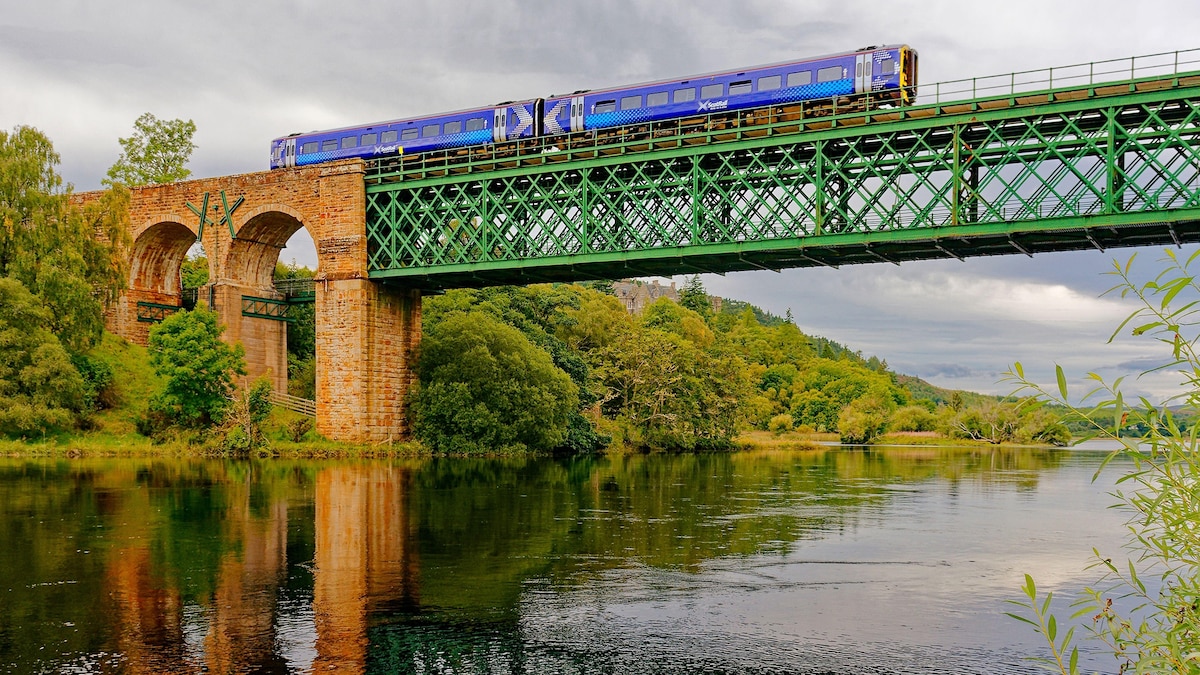
Shin Railway Viaduct

Sight·InvershinMentioned by National Geographic
Shin Railway Viaduct
Photo: Wikimedia Commons
“The Shin Railway Viaduct is a railway viaduct that crosses the Kyle of Sutherland.The viaduct carries the Far North Line between Inverness and Wick and Thurso. Invershin railway station is at the north-eastern end of the viaduct, while Culrain railway station is a short distance to the south.”
— Wikipedia
Read more on Wikipedia →

In the coverage1 story

National GeographicOct 23

Uncover Remote Trails on These U.K. Request Stop Hikes

Many of the scenic rail routes that wind through the British countryside are dotted with request-stop stations: secluded platforms that act as gateways to some of the country's most enchanting walks.

Lattice of green metal spans estuary

15 things in this story
  • Shin Railway ViaductSightLattice of green metal spans estuary
  • Elsewhere
  • Treffry ViaductSightLuxulyan, United KingdomStretches across train line 30 metres below
  • Eden ProjectSightPar, United KingdomRising domes reachable on foot
  • Giltar PointSightPenally, United KingdomWindswept headland looks out over bays
  • Caldey IslandSightPenally, United KingdomSheltered bays nearby
  • Church Doors CoveSightPenally, United KingdomHome to limestone arch jutting into swell
  • St James’s ChurchSightManorbier, United KingdomViews over village and Norman castle
  • Loch DùghaillSightAchnashellach, United KingdomStygian water below
  • Easan Dorcha waterfallSightAchnashellach, United KingdomSurges over rocks racing down valley
  • Malltraeth EstuarySightBodorgan, United KingdomPatrolled by lavishly crested lapwings
  • Ynys LlanddwynSightBodorgan, United KingdomIsland beaches, ruins, lighthouse reachable at low tide
  • NewboroughNeighborhoodBodorgan, United KingdomStop for fish and chips
  • MalltraethNeighborhoodBodorgan, United KingdomStop for a well-earned drink
  • Carbisdale WoodTrailCulrain, United KingdomCrunch through morning frost
  • Carbisdale CastleSightCulrain, United KingdomClocktower designed with only three faces
Read the full piece at National Geographic →
↑↓ to navigate · Enter to open · Esc to close